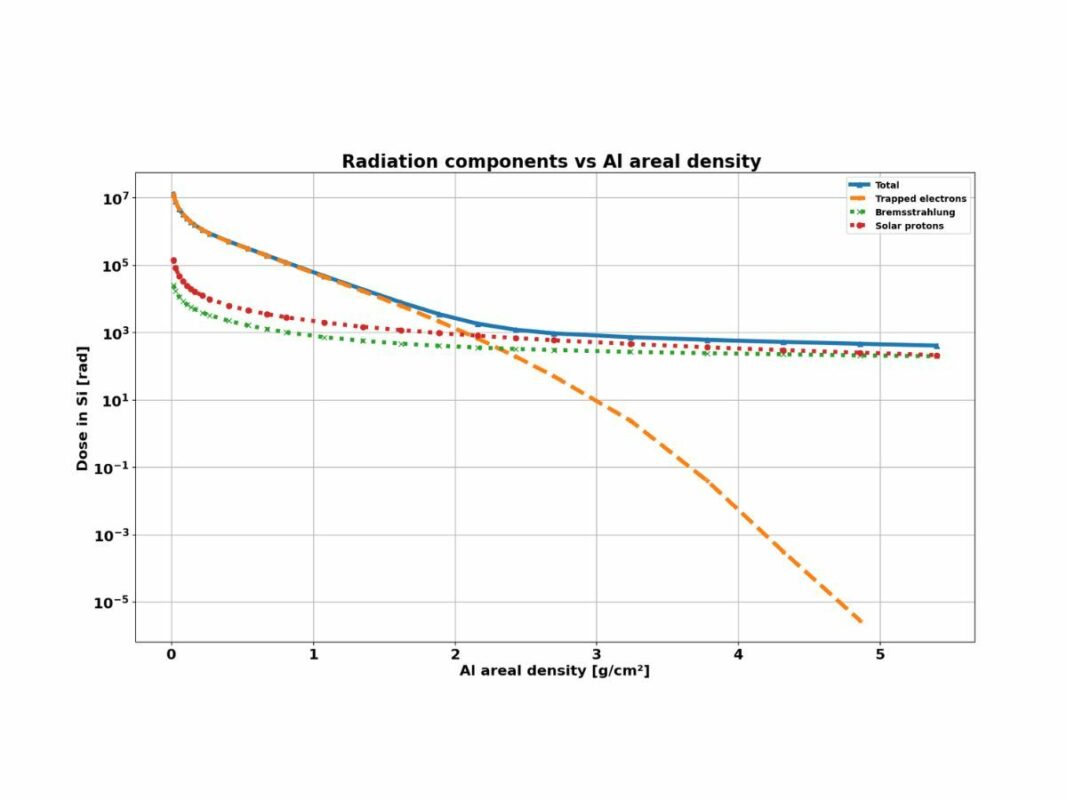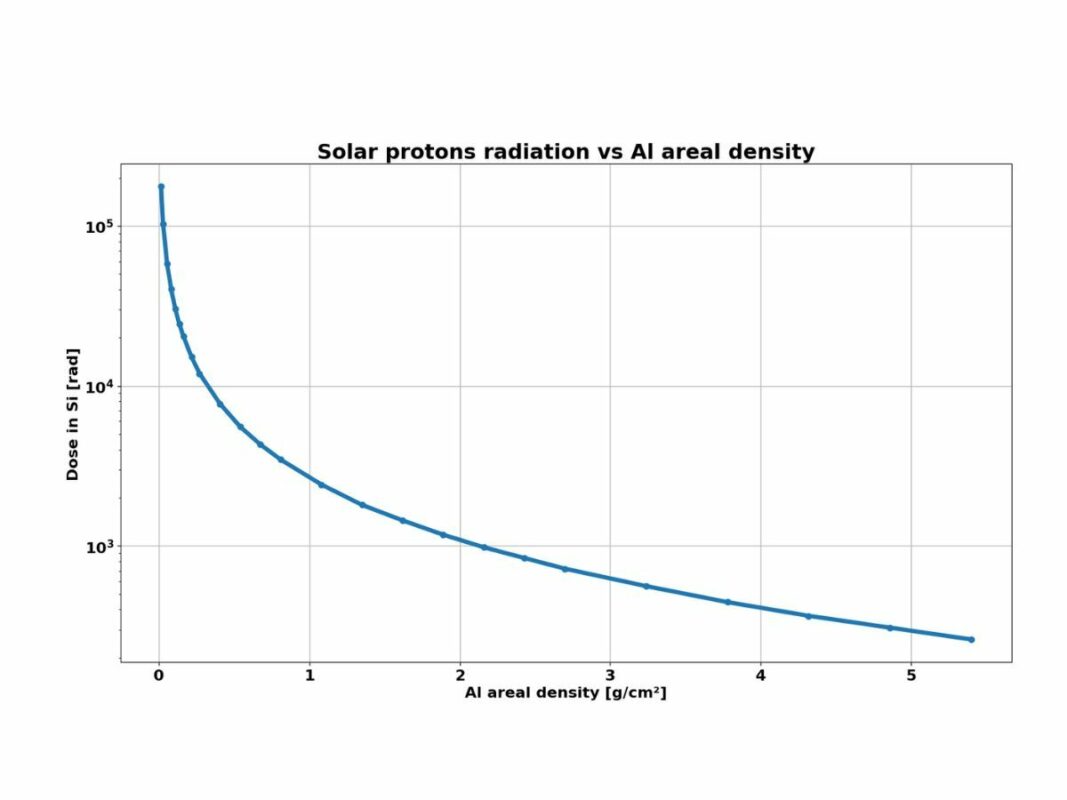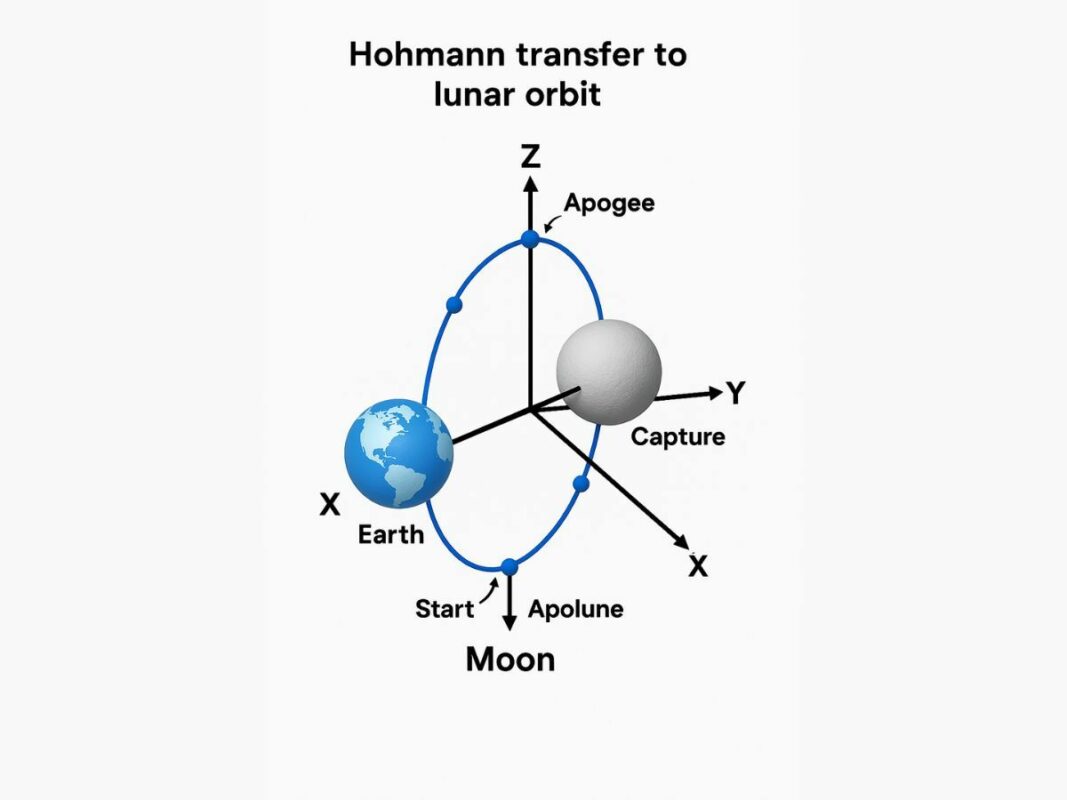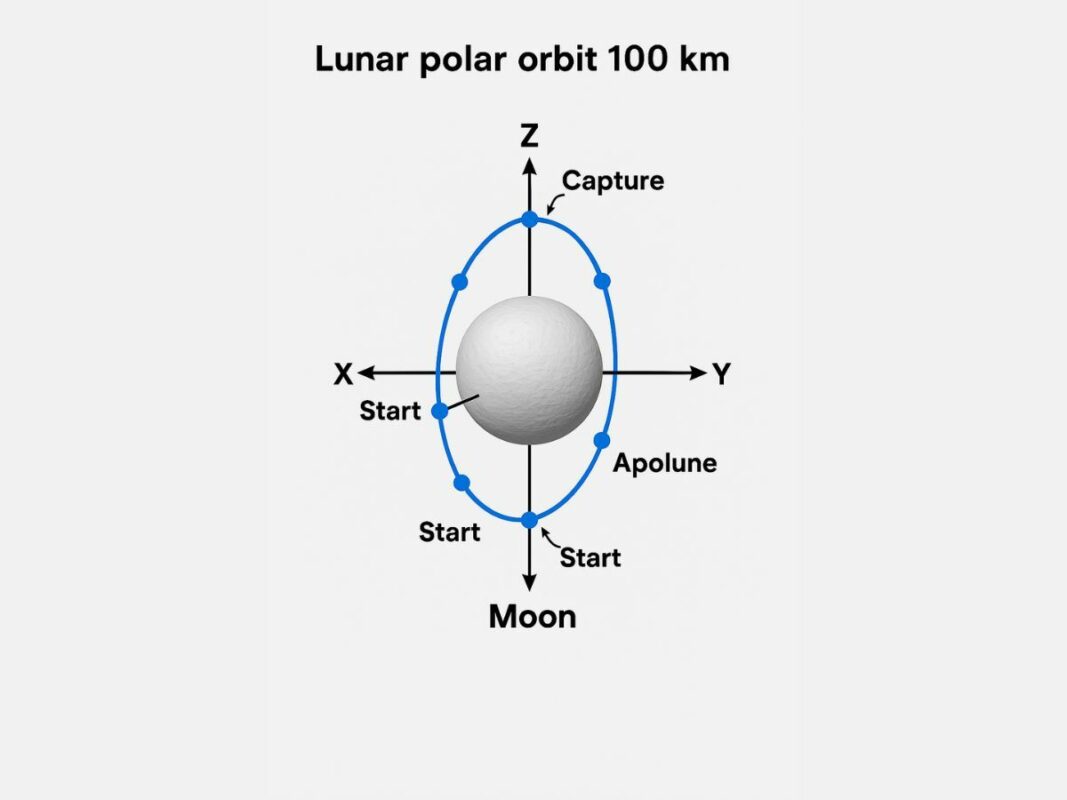
In the vacuum of deep space, survival is often a matter of millimeters. For the sensitive electronics powering the next generation of lunar explorers, those few millimeters of shielding-combined with advanced radiation-hardened logic are all that stand between a successful mission and catastrophic failure.
As MIRORES prepares to deliver the mid/far-IR payload for the European Space Agency (ESA) High-resolution Lunar Mineralogy Mapper (HRMMM) mission, co-founder Mirosław Kowaliński has completed a comprehensive technical deep dive into the radiation gauntlet that our hardware must endure.
The Gauntlet. From Earth to the lunar surface
The journey to the Moon via the Hohmann transfer orbit is not merely a logistical challenge; it is a transition through increasingly hostile radioactive environments. Unlike satellites in Low Earth Orbit (LEO), which enjoy the protective „umbrella” of Earth’s magnetic field, lunar missions must face the full force of cosmic weather.
Mr. Kowaliński’s analysis identifies four critical radiation phases:
- Magnetosphere exit: as the spacecraft departs Earth’s magnetic field, it loses its natural defense against high-energy particles. This transition marks the beginning of the most vulnerable stage for standard electronic components.
- The Van Allen Belts: to reach the Moon, the payload must cross these regions of trapped protons and electrons. This exposure significantly contributes to the Total Ionizing Dose (TID), which can degrade semiconductor performance over time if not managed by specialized shielding.
- Deep space & solar flares: in interplanetary space, the primary threats are Galactic Cosmic Rays (GCR) and Solar Proton Events (SPE). The danger is unpredictable; a single intense solar flare can deliver a radiation dose equivalent to an entire year’s worth of operation in LEO.
- Single Event Effects (SEE): beyond steady degradation, high-energy ions can strike a single transistor, causing „bit-flips” (SEU) or permanent hardware damage such as latch-ups (SEL) or burnouts (SEB).
Designing for the journey
At MIRORES, our engineering philosophy is clear: we don’t just design for the destination; we design for the journey. To ensure the success of the HRMMM mission and future In-Situ Resource Utilization (ISRU) efforts, our FIR spectrometers are being developed with „rad-hard” architectures. This involves a multi-layered protection strategy, combining physical shielding with redundant logic systems capable of detecting and correcting radiation-induced errors in real-time.
The future of lunar exploration
Protecting our instrumentation is an essential prerequisite for the future of lunar mining. If we cannot ensure the longevity of our sensors during the transit and their operation in the harsh lunar environment, the dream of sustainable space resource gathering remains out of reach.
As we look toward the next decade of exploration, the industry faces a dual challenge: managing the relentless radiation of the journey and the extreme thermal fluctuations of the lunar surface. At MIRORES, we are solving these problems today to enable the lunar economy of tomorrow.