
LUNAVEST
An economic assessment of lunar resource use, from prospecting to end customers.
LUNAVEST is an ESA study led by MIRORES that assesses the economic viability of lunar resource utilisation. It covers prospecting, extraction, processing, delivery and end customers.
Shipping water, oxygen and building materials from Earth makes every lunar mission expensive. Using resources found on the Moon could lower that cost, if it pays off. LUNAVEST, commissioned by the European Space Agency, checks whether it does.
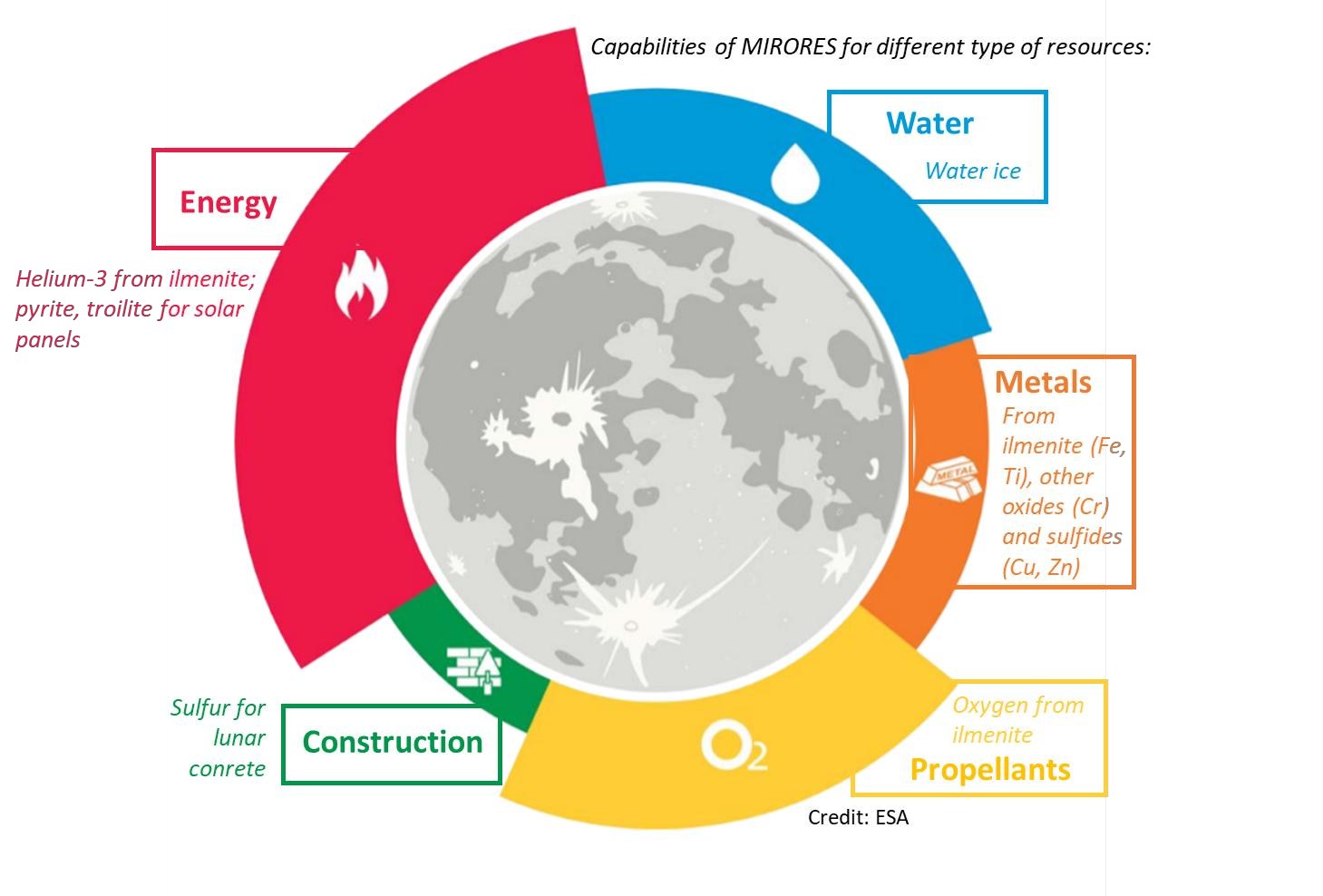
The full lunar resource value chain
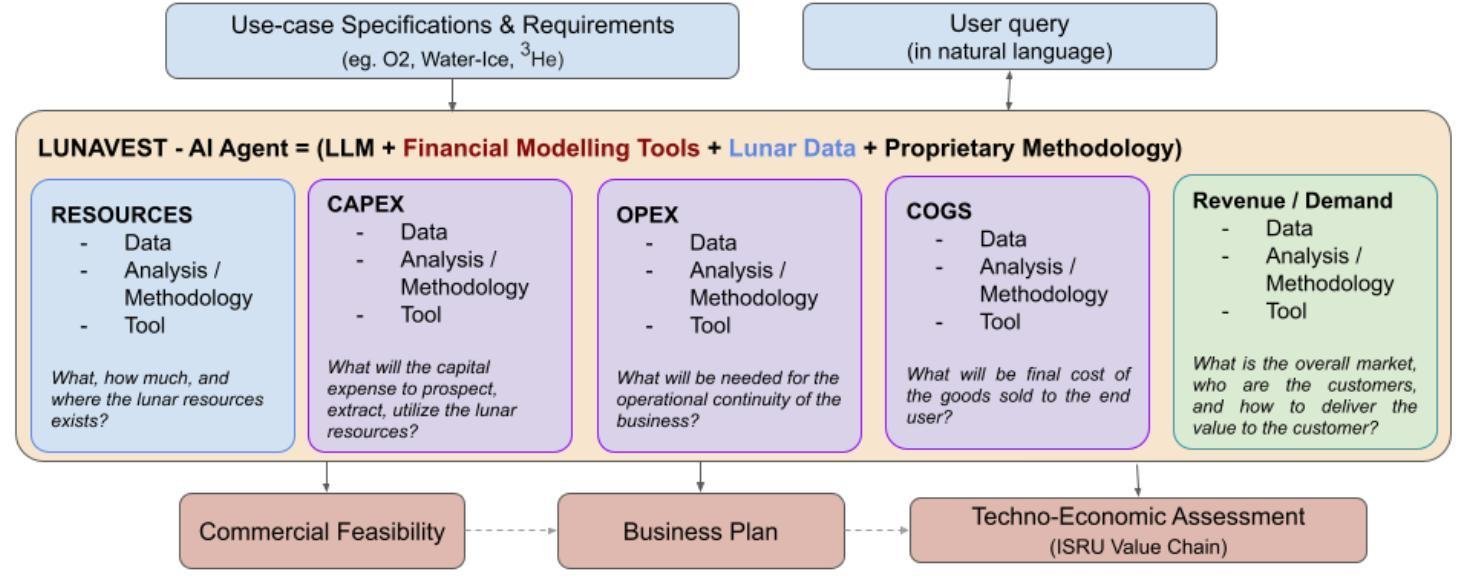
The study covers the entire value chain. It looks at where resources occur, in what concentrations and how hard they are to extract. It also covers processing, storage, transport, energy and infrastructure. Finally, it identifies potential customers and what they would pay. Energy suppliers, processing-plant operators and transport providers are assessed separately, as each needs its own business case. The study also explores whether companies could share infrastructure to split costs and risk.
The resources analysed include water, oxygen, building materials, metals and rare earth elements. Helium-3 is a special case: its high value on Earth may justify bringing it back from the Moon. The outcome is a flexible economic model. Adjusting its assumptions about resources, demand and costs shows when a lunar venture becomes profitable.
Consortium
MIRORES leads the consortium and contributes geological and mineralogical expertise, drawing on its LUPE instrument work and its lunar data platform. The partner is SPAIDER Space (Luxembourg).
Funding: European Space Agency, contract no. 4000153330/26/NL/AT.
Read more: Nauka w Polsce / PAP: Polska firma MIRORES na zlecenie ESA zbada, czy i co opłaca się wydobywać na Księżycu